
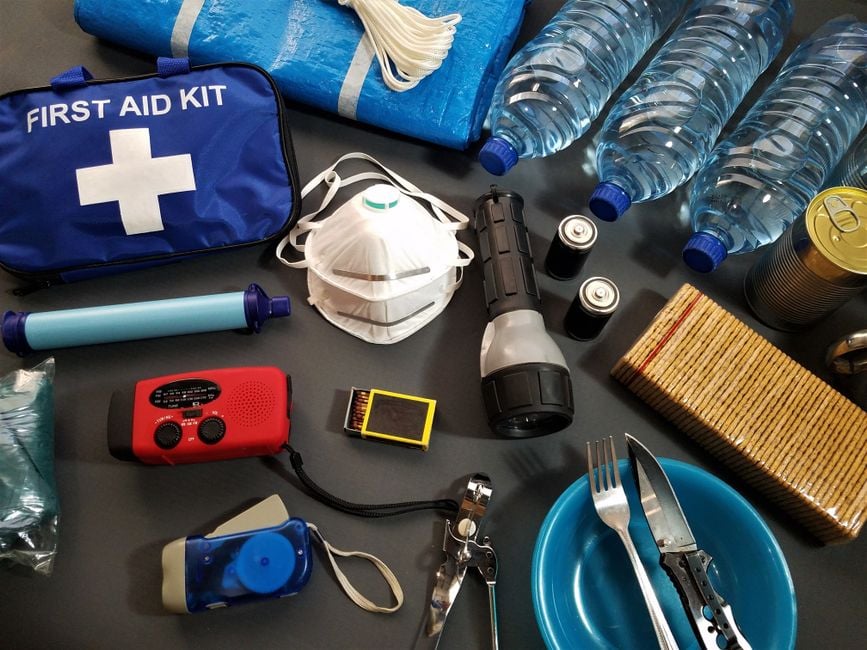
Most people own a smoke detector they hope never goes off. A first aid kit works on the same principle. You buy it, store it and check it now and then, so that on the worst day of the year, you’re not left searching for supplies while someone you love is hurt.
Yet a surprising number of homes still go without one. Emergency preparedness company 1stHour, which focuses on the critical minutes between an injury and professional care, sees this gap as one of the easiest safety problems to fix. Here’s why a well-stocked trauma kit matters, what it should contain and where to keep it.
Help Doesn’t Arrive Instantly
When someone is badly hurt, the first person on the scene is rarely a paramedic. It’s usually a family member, a coworker or a bystander. What they do in the next few minutes can shape what happens next.
Ambulance response times vary widely depending on where you are. A JAMA Surgery study of 1.7 million EMS calls found that the average wait for an ambulance was about 6 minutes in urban and suburban areas. In rural areas, waits sometimes extended up to a whopping ninety minutes.
The full journey to the hospital takes even longer. Research presented by the American College of Surgeons found that for patients with the most severe injuries, total EMS call times, covering response, time on scene and transport, averaged 97.1 minutes in rural areas compared with 69 minutes nationally.
In 1stHour’s view, those numbers explain why a first aid kit belongs in every home and vehicle. The kit isn’t a replacement for emergency care. It’s what fills the gap until that care arrives.
Many Households Aren’t Prepared
Despite those wait times, preparedness levels remain low. According to the CDC, 44% of Americans do not have a first aid kit. A separate CDC analysis of a 2021 national survey found that only about 1 in 3 respondents, or 36%, had an emergency supply kit.
Early Action Can Save Lives
Severe bleeding is one of the most time-sensitive emergencies a person can face. The right equipment, used quickly, can make a measurable difference.
A multicenter study published in the Journal of the American College of Surgeons looked at more than 1,000 patients with serious injuries to the blood vessels of the arms or legs. It found that tourniquets applied by civilians before patients reached the hospital were independently associated with a six-fold reduction in deaths.
That finding highlights an important point. A first aid kit is most useful when it contains supplies that match the kinds of injuries people actually face, and when it’s close enough to grab immediately.
What a Good First Aid Kit Should Include
1stHour draws a clear line between two types of kits, and many households benefit from having both.
A standard first aid kit covers everyday injuries. It should include adhesive bandages in several sizes, gauze pads and rolls, medical tape, antiseptic wipes, burn gel, gloves, scissors and tweezers. These supplies handle cuts, scrapes, minor burns and splinters.
A trauma kit is built for the injuries that become life-threatening in minutes. It typically adds a tourniquet for severe limb bleeding, a pressure bandage such as an Israeli emergency bandage, compressed gauze for packing wounds, trauma shears for cutting away clothing, a splint for suspected fractures and an emergency blanket to help prevent shock.
For families who drive long distances, live in rural areas, hunt, farm or spend time outdoors, a trauma kit can be just as important as a basic one.
Where to Keep Your Kit
A kit only helps if you can reach it quickly. 1stHour recommends thinking about the places where accidents are most likely to happen and the places farthest from help.
At home, the kitchen and garage or workshop are common injury spots, so those are good places to keep a kit. In the car, a kit should be easy to reach, not buried under luggage in the trunk. Outdoors, whether you’re hiking, hunting, boating or camping, carry a compact kit in your pack. At work, find out where the workplace kit is stored before you ever need it.
The CDC also advises preparing supplies for your home, workplace and vehicles, because emergencies can happen anywhere.
Keep It Ready
Owning a kit is the first step. Keeping it usable is the second. Check your kit at least once a year, replace anything that’s been used, and look at expiration dates on items like burn gel, antiseptic wipes and adhesive bandages. A simple habit, such as checking your kit when you change the batteries in your smoke detector, makes this easy to remember.
It also helps to make sure everyone in the household knows where the kit is kept. In an emergency, nobody should have to ask.
Learn How to Use It
Supplies are only part of the picture. Basic training builds the confidence to act. The American College of Surgeons’ Stop the Bleed program offers courses that teach people how to control severe bleeding with direct pressure, wound packing and tourniquets. Local hospitals, fire departments and organizations such as the American Red Cross also offer first aid and CPR training.
1stHour encourages anyone who keeps a trauma kit to take a bleeding control class. Even a short session can make it far easier to stay calm and act quickly.
The Bottom Line
Emergencies rarely come with warning, and help can take longer to arrive than most people expect. A well-stocked first aid kit, kept within reach and paired with basic training, gives you a way to act in those first critical minutes. It’s a small step that can make a real difference for the people around you.
In an emergency, always call 911 first. A first aid kit supports professional care. It never replaces it.
1stHour
admin@entremax.media
+1 401 307 3371
25 Brandywine Drive
Deer Park
New York
11729
United States


