
Key Takeaways
- Nye County Ordinance No. 630 took effect September 21, 2026, adding an ADU definition and allowing ADUs in seven residential zones across the Pahrump Regional Planning District
- Each lot is limited to one guest residence or ADU, capped at 1,500 square feet, and county zoning does not reach parcels outside the planning district or inside a municipality
- Before designing anything, homeowners should confirm their parcel’s zone, check for deed restrictions, and look into well, septic, and setback requirements specific to their property
- Short-term rental plans add another layer of rules, including a 300-foot separation requirement between registered rentals in Pahrump
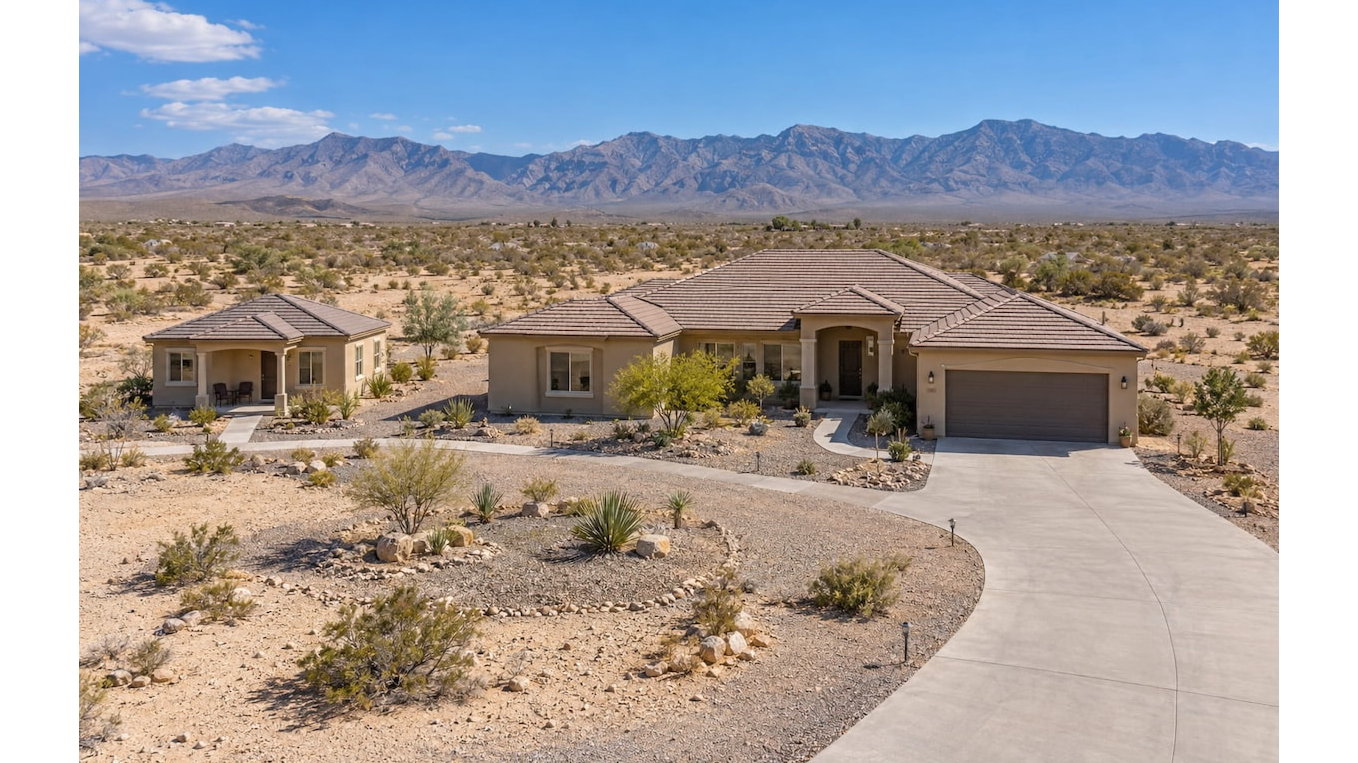
Building a second home on a family property in Pahrump just got a little more straightforward, thanks to a recent change in Nye County’s zoning rules. Homeowners thinking about an accessory dwelling unit, often called an ADU, now have a clearer legal path in several residential zones. Clearer does not mean automatic, though. Every parcel carries its own zoning history, access to utilities, and sometimes private restrictions that can change what is actually allowed, so parcel-level homework still comes first before any design work begins.
New Ordinance Permits ADUs in Seven Zones
Nye County Ordinance No. 630 was adopted by the Board of County Commissioners on September 1, 2026, and took effect September 21, 2026, after the required newspaper publication period. The ordinance updates Nye County Code Title 17, the chapter covering the Pahrump Regional Planning District, by adding a formal definition for accessory dwelling units and writing ADU standards into several residential zoning sections.
The change applies to seven residential zones: RH-9.5, RH-4.5, RE-2, RE-1, SE, VR-20, and VR-10. Each of these zones now lists an ADU, or a guest residence, as a permitted use, meaning a property owner can generally pursue one without a public hearing in front of the Pahrump Regional Planning Commission. That is meaningfully simpler than a conditional use process, though it still requires county sign-off before any shovel hits the ground.
A few zones were left out. Village Residential (VR-8), Multifamily (MF), and Mobile Home Park (MH) zones do not list an ADU or guest residence as an allowed use at all. Nye County treats any use not listed in a zoning district as prohibited there, so a homeowner in one of those zones would need a separate zoning text amendment before building a second unit.
For a closer look at how these zoning updates might shape a specific property’s options, Draper Dream Team at Top Dog Real Estate offers local, practical perspective grounded in Pahrump’s market.
What Counts as an ADU Under Ordinance 630
The ordinance defines an ADU as an independent dwelling located on the same parcel as a legally established primary single-family residence. To qualify, the unit needs its own living, sleeping, eating, cooking, and sanitation facilities, essentially a complete small home rather than a bedroom addition or a converted shed.
This definition lines up with how the county’s zoning code already treated the related idea of a guest residence or guest building, an accessory structure used for residential purposes on a lot that already has a principal home. Ordinance 630 folds the newer ADU language into that existing framework rather than replacing it outright, which is one reason parcel-specific review still matters so much.
Size Cap: One ADU, 1,500 Square Feet
Every zone that allows an ADU applies the same ceiling: one guest residence or ADU per lot, not to exceed 1,500 square feet. This is a flat cap rather than a percentage tied to the size of the main house, so it applies the same way whether the primary residence sits on a quarter-acre lot or a sprawling multi-acre parcel typical of rural Pahrump.
Homeowners dreaming of a larger guest house, workshop-with-living-quarters, or multi-generational suite will want to measure twice. Other accessory buildings on the same property can be built much larger under the zoning code, but only if they are not used for residential purposes. Once cooking and sleeping facilities enter the picture, the 1,500-square-foot cap applies.
Step One: Is Your Parcel in the Planning District?
Before getting attached to a floor plan, the most important question is also the simplest: does the ordinance even apply to this property? Nye County’s zoning authority, including Ordinance 630, only reaches parcels inside the Pahrump Regional Planning District. A large share of Nye County land sits outside that boundary, governed instead by area plans covering places like Tonopah, Beatty, Amargosa Valley, and Round Mountain, where the zoning districts and ADU allowances described here simply do not apply.
Confirming planning district status early saves a lot of wasted design time. A homeowner with acreage near Pahrump but technically outside the district boundary would need to work through an area plan process instead of the straightforward permissive-use path that Ordinance 630 created.
Zoning Rules Stop at District and City Lines
County zoning, including the new ADU standards, applies only within the Pahrump Regional Planning District and only outside any incorporated municipality. If a parcel sits inside a town or city with its own zoning authority, that local government’s rules govern instead, even though the property is physically located within Nye County.
This distinction matters because Pahrump itself operates under county zoning as part of the planning district, but other Nye County communities may have different arrangements entirely. Checking which authority actually controls a parcel is a basic first step before assuming Ordinance 630 applies.
Deed Restrictions Can Still Override Zoning
County zoning ordinances are not designed to override private deed restrictions, and stricter covenants recorded against a property can still block an ADU even where county zoning allows one. Nye County will not enforce these private restrictions itself, but a homeowners association or a neighbor with standing under the covenant could.
This is especially relevant in some of Pahrump’s older covenanted subdivisions, where architectural or use restrictions were put in place well before Ordinance 630 existed. Pulling a copy of the recorded deed restrictions, not just relying on the county zoning map, rounds out a proper parcel check.
Confirming Permits, Utilities, and Setbacks
Once a homeowner confirms the parcel sits in the planning district, is zoned for ADU use, and has no conflicting deed restrictions, the next layer involves the practical mechanics of permitting. An ADU built under a permissive-use designation still requires county approval and typically a scaled plot plan showing setbacks, building separations, and utility details before construction can begin.
Zoning Review and Building Permit Steps
The general approval path runs through two stages. First comes a zoning review application submitted to the Nye County Planning Department, which typically needs a scaled plot plan, setback and building separation details, and information on well or septic locations. Second comes a standard building permit from Nye County Building and Safety once zoning review is cleared.
A few practical pointers worth keeping in mind:
- A homeowners association or similar body may need to sign off where applicable, even after zoning review is approved.
- Dust control planning is typically part of the submission in this part of Nevada.
- Homeowners with questions about what a complete application looks like can contact the Nye County Planning Department directly before submitting.
Domestic Wells Need a State Water Form
Many properties around Pahrump rely on domestic wells rather than municipal water service, and that detail carries its own paperwork. When an ADU will connect to a domestic well, the Nevada Division of Water Resources requires an Accessory Dwelling form as part of the process, a detail the county’s own planning guidance flags directly.
Septic capacity matters too, particularly for homeowners who later plan to rent out the unit, since septic systems sized only for a single household may need evaluation before supporting a second dwelling full time.
Planning to Rent? Know the Rental Rules
An ADU can be a practical source of rental income, whether for a family member, a long-term tenant, or a vacation guest. Nye County’s zoning code does not put a minimum lease term or ownership condition on long-term rentals of a guest residence or ADU, so renting the unit out on a standard lease is largely a matter of ordinary landlord responsibilities rather than special zoning hurdles.
Short-term rentals follow a different set of rules entirely, governed by separate Town of Pahrump requirements layered on top of the county’s zoning framework. Homeowners considering a nightly or weekly rental setup need registration, licensing, and compliance steps well beyond what a standard lease requires.
Short-Term Rentals Face a 300-Foot Rule
Short-term vacation rentals in Pahrump, meaning stays under 30 days, fall under separate town registration and licensing requirements, including a notable 300-foot separation rule between registered rentals. That spacing requirement means a property owner cannot simply assume a short-term rental will be approved just because the ADU itself is legal under county zoning; proximity to other already-registered rentals can determine eligibility.
Because short-term rental rules sit with the Town of Pahrump rather than Nye County planning, homeowners weighing this option should expect to work through a separate registration and licensing process on top of the standard zoning review and building permit steps already required for the ADU itself.
Parcel-Level Review Still Comes First
Ordinance 630 opened a meaningfully wider door for ADUs across seven residential zones in the Pahrump Regional Planning District, and that is genuinely good news for homeowners who have been eyeing a guest house, a space for aging parents, or a long-term rental unit. None of that changes the fact that each parcel carries its own combination of zoning district, deed restrictions, utility setup, and setback standards.
For homeowners weighing how an ADU might affect a property’s long-term value or fit into a broader plan for the land, speaking with a local real estate professional alongside the county planning department can help connect the zoning details to the bigger picture.
Before committing to a design, it pays to work through the full checklist of Nye County ADU requirements with the planning department and, where rental income is part of the plan, the Town of Pahrump’s licensing office as well.
Draper Dream Team at Top Dog Real Estate
hello@draperdreamteam.com
+1 405 834 4255
1210 E Basin Ave # 6, Pahrump
PAHRUMP
Nevada
89060
United States


