
New Survey Highlights Awareness Gaps Among Type 1 Diabetes Families That Can Create Barriers to Action
PR Newswire
NEW YORK, July 20, 2026
Misconceptions about type 1 diabetes may be shaping how families understand their risk, while emotional barriers and limited provider guidance add challenges to screening.
Key Facts:
- New survey findings from Beyond Type 1 and commissioned by Sanofi show 26% of respondents with a first degree family member do not believe they’re at risk of developing T1D, despite having up to a 15X greater likelihood.
- Misconceptions may be contributing to that disconnect: 38% of those surveyed mistakenly cited lack of physical activity as a T1D risk factor, while 63% incorrectly believed T1D is primarily diagnosed in children, even though adults represent ~60% of new diagnoses each year.
- Risk education appears to increase openness to screening, but barriers remain: 85% of respondents said learning about their or their child’s heightened risk made them more likely to screen, while 46% are not considering or are undecided about screening in the next six months.
NEW YORK, July 20, 2026 /PRNewswire/ — New research shows a striking disconnect among people with a first-degree family history of type 1 diabetes (T1D): despite having up to a 15X greater likelihood of developing the disease, more than one in four respondents (26%) do not think they or their child are at risk.
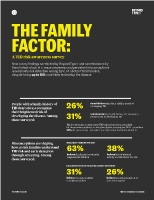
The findings come from “The Family Factor: A T1D Risk Awareness Survey,” a new survey from global diabetes nonprofit Beyond Type 1 and commissioned by Sanofi. The survey highlights risk awareness gaps among adults and caregivers of children with a first-degree family member with T1D and suggests that persistent misconceptions about who develops the disease, what causes it and when screening is relevant may be shaping whether at-risk individuals see early detection as important to them.
Among those surveyed, 63% incorrectly believed the disease is primarily diagnosed in children, while in reality, adults represent ~60% of those newly diagnosed with T1D each year. Additionally, 38% of respondents mistakenly cited lack of physical activity as a risk factor for T1D, when in fact, T1D is an autoimmune disease not caused by lifestyle factors.
Misconceptions around screening were also common: 26% of those surveyed believed autoantibody screening is only possible after symptoms appear, and 31% believed it is only available through specialists.
These gaps matter. Today, over 2 million people in the U.S. live with T1D, an autoimmune disease where the immune system attacks insulin-producing cells in the pancreas. For many, the diagnosis comes unexpectedly—often following severe symptoms that can lead to serious, potentially life-threatening complications, including diabetic ketoacidosis (DKA). Yet, the survey shows that 28% of respondents have either never heard of DKA or don’t know what it is.
“A type 1 diabetes diagnosis can reverberate through an entire family, raising new questions about risk, screening and what comes next,” said Kristian Hurley, EVP Social Impact and Global Advocacy, at Beyond Type 1. “These findings show the need for clearer education, trusted guidance and easier pathways to screening, so families can better understand their options and make informed decisions.”
Motivational Drivers & Barriers to Screen
Although many express concern about their risk, some still feel hesitant to act. While 82% of respondents expressed concern about their own or their child’s risk of developing T1D, 46% stated that they are either not considering early autoantibody screening or have not yet decided whether they would screen in the next six months.
This gap may be connected to conversations happening in the doctor’s office. While 62% of those surveyed mentioned their doctor talked about their own or their child’s T1D risk, conversations about autoantibody screening are less common. Only 28% of respondents familiar with screening reported their doctor initiated a discussion with them about it.
Additionally, respondents who do not plan to – or are unsure about – whether to screen cited emotional and logistical barriers as reasons for screening hesitation:
- Emotional Barriers: 21% said a positive result would cause a lot of anxiety for them or their child, and 1 in 10 prefer not to know about future health risks. Among caregivers, 19% said they would feel guilty if their child developed T1D because they’d feel like it was their fault.
- Logistical Barriers: 18% said they don’t know how to get screened, 17% said they would not know what to do next if they or their child tested positive, and 23% of respondents said that because they or their child are healthy now, they want to wait until something changes.
Knowledge Sparks Interest — Support Drives Action
Learning about personal T1D risk is a powerful motivator, but broader support can be critical to help encourage action. A staggering 85% of respondents stated that they felt more likely to screen once they learned they were at a heightened risk of developing the disease.
To move from hesitancy to action, a doctor’s recommendation is the strongest motivator across surveyed caregivers and adults at risk (56%), followed by learning more about the screening process (49%), learning more about the disease (42%), hearing from those who have been screened (37%), and learning there’s a support community available after screening (30%).
“The Family Factor survey gives us an important window into the minds of at-risk families – highlighting that while education drives intent, support from healthcare providers and those in the T1D community remain foundational drivers for action,” says Dr. Shara Bialo, Senior Medical Director at Sanofi and pediatric endocrinologist. “These survey findings can help healthcare providers better understand the barriers first-degree family members face, so that we can bridge the gap between awareness and follow-through.”
While screening for T1D autoantibodies can help identify risk before symptoms emerge, its role in routine clinical practice remains limited, reinforcing the importance of these survey findings and the need to advance early detection.
Key takeaways of “The Family Factor: A T1D Risk Awareness Survey” can be found here. Visit BeyondType1.org for more information.
Research Methodology
This survey was fielded by Ipsos (www.ipsos.com) as an online, 15-minute, self-administered survey among U.S. adults who are at risk of developing type 1 diabetes and caregivers to children under age 18 who are at risk of developing type 1 diabetes between April 1 and May 1, 2026. The national sample included 1,000 U.S. adults and caregivers who met survey qualification criteria. Additional augmented interviews were conducted in six key markets – TX, GA, CA, FL, MA, and NY – to achieve a base size of n=150 each, including a mix of at-risk adults and caregivers. Respondents were recruited from opt-in panels of general population respondents across the country.
To participate as an at-risk adult, respondents had to be ages 18-45 and have a first-degree family member (e.g., a parent, child, or sibling) diagnosed with T1D. To participate as a caregiver, respondents had to be ages 18-60 and be the parent or caregiver of a child who has a first-degree family member diagnosed with T1D. Potential respondents were excluded if they were unwilling to provide informed consent, were not the primary decision maker for their healthcare decisions or if they/their child had previously taken an autoantibody blood test for T1D. The final sample size for the survey is 1,511, including 511 respondents for the state-level augments, which are not included in the national findings. No weights were applied to either sample, and findings reflect the opinions of these respondents only.
About Beyond Type 1
Beyond Type 1 is a global nonprofit changing what it means to live with diabetes, serving the world’s largest digital diabetes community. Co-founded by Nick Jonas and Juliet de Baubigny in 2015, the organization provides tools, education, and support to help people with type 1 and type 2 diabetes survive, thrive, and drive innovation toward prevention and cures. Visit BeyondType1.org to learn more.
About IPSOS
Ipsos is one of the largest market research and polling companies globally, operating in 90 markets and employing nearly 20,000 people.
Our passionately curious research professionals, analysts and scientists have built unique multi-specialist capabilities that provide true understanding and powerful insights into the actions, opinions and motivations of citizens, consumers, patients, customers or employees. Our 75 business solutions are based on primary data from our surveys, social media monitoring, and qualitative or observational techniques.
“Game Changers” – our tagline – summarizes our ambition to help our 5,000 clients navigate with confidence our rapidly changing world.
Founded in France in 1975, Ipsos has been listed on the Euronext Paris since July 1, 1999. The company is part of the SBF 120, Mid-60 indices, and is eligible for the Deferred Settlement Service (SRD).
ISIN code FR0000073298, Reuters ISOS.PA, Bloomberg IPS:FP

 View original content to download multimedia:https://www.prnewswire.com/news-releases/new-survey-highlights-awareness-gaps-among-type-1-diabetes-families-that-can-create-barriers-to-action-302828805.html
SOURCE Beyond Type 1


