
Key Takeaways
- Sleep wrinkles are caused by mechanical compression and friction – not muscle movement – and can become permanent over time if left unaddressed.
- Mulberry silk reduces friction against skin by up to 43% compared to cotton, allowing skin to glide rather than crease during sleep.
- Unlike cotton, silk does not absorb moisture, meaning your skin’s natural oils and nighttime skincare stay on your face where they belong.
- Momme count and silk grade matter: 19 momme is the minimum worth considering, with 22-25 momme offering the most durable, skin-friendly surface.
- Not all silk pillowcases perform equally – quality certifications and silk grade (6A being the highest) determine how effective the pillowcase actually is.
Most skincare conversations centre on serums, SPF, and genetics. But for roughly eight hours every night, your face is pressing against a fabric surface – and that surface plays a surprisingly significant role in how your skin ages.
Your Pillowcase Is Ageing You While You Sleep
The idea that a pillowcase could contribute to wrinkles sounds like an overstatement, but the mechanics are straightforward. When skin is repeatedly pushed, compressed, and dragged against a rough or absorbent fabric night after night, it responds the way any material under mechanical stress does – it begins to crease along those lines of pressure. The skin around the eyes, mouth, and cheeks is especially thin and vulnerable, making it the first place these lines appear.
What makes this more concerning is the cumulative nature of the damage. A single night leaves no trace. Years of the same position on the same type of fabric, however, can etch lines that morning stretching no longer smooths away. The good news is that the fabric you sleep on is one of the most controllable variables in the equation.
Sleep Wrinkles Are Not Expression Lines
Drawing a clear distinction here matters, because the two types of wrinkles require different solutions. Expression lines – the crow’s feet from squinting, the lines between the brows from frowning – develop along the direction of repeated muscle contractions. They are intrinsic, forming from the inside out.
Sleep wrinkles are different. Research published in the Aesthetic Surgery Journal notes that sleep wrinkles form perpendicular to muscle direction, caused entirely by external forces: pillow pressure, fabric resistance, and prolonged compression. Dermatologists describe this as a distinct category of wrinkle formation driven not by how the face moves, but by what it rests against.
Compression vs. Muscle Movement
When the face is pressed into a pillow for several hours, the skin folds and holds that folded shape under sustained load. During youth, the skin snaps back easily. With age, as collagen and elastin naturally decline, that recovery slows. The fold lingers longer each morning until, eventually, it becomes a permanent feature.
Why Side Sleepers Are Most at Risk
Back sleepers distribute their weight more evenly and keep their face largely free of direct compression. Side sleepers, by contrast, press one side of the face firmly into the pillow for the duration of sleep. Over time, this asymmetric pressure can produce visibly more pronounced wrinkles on one cheek and around one eye – a tell-tale sign of habitual compression-related aging. Stomach sleepers face the most exposure of all.
How Friction Creates Permanent Creases
Compression alone is not the only mechanism at work. Friction – the resistance between skin and fabric as the sleeper shifts position – adds a second layer of damage. Every small movement causes the fabric to drag against the skin, pulling it in directions that compound the compression already occurring.
Repeated Tugging Etches Lines Over Time
This dragging effect, repeated hundreds of times across a single night and thousands of times across months and years, gradually breaks down the structural integrity of the skin at those contact points. Micro-abrasions accumulate. The skin surface becomes more reactive and more prone to redness and irritation. In people with sensitive skin conditions like eczema or rosacea, even a moderately rough fabric can trigger flare-ups. The solution is not to stop sleeping – it is to change the surface.
Silk Significantly Reduces Friction Against Skin
Independent laboratory testing has shown that silk reduces friction against skin and hair by between 34% and 43% compared to cotton. That is a meaningful difference, not a marginal improvement. The practical effect is that the skin surface experiences far less mechanical stress across the same number of hours and movements.
Skin Glides Instead of Creasing
The ultra-smooth weave of high-quality mulberry silk allows skin to glide as the sleeper moves. Rather than catching, pulling, and folding, the skin slides across the surface with minimal resistance. This directly reduces the repetitive tugging that etches compression lines into the skin over time. Dermatologists frequently cite this quality as the primary reason they recommend silk pillowcases for patients concerned about skin aging.
No Micro-Abrasions, No Irritation
The non-abrasive texture of mulberry silk also means the tiny surface tears that rougher fabrics cause simply do not occur. For those with sensitive or reactive skin, this is particularly relevant – less friction means less redness, less irritation, and a calmer skin barrier overall by morning.
Silk Keeps Moisture Where It Belongs
Friction is only half the picture. Hydration is the other. Skin that is well-moisturised is plumper, more elastic, and more resilient. Dehydrated skin, by contrast, is more prone to creasing, slower to recover, and visibly duller. What your pillowcase does to the moisture content of your skin overnight is therefore just as important as how much friction it generates.
Cotton Strips Skin; Silk Does Not
Cotton is highly absorbent by nature – that is often considered a feature in other contexts. As a pillowcase fabric, however, it becomes a liability. Cotton draws moisture directly from the skin’s surface throughout the night, contributing to dryness and irritation by morning. Silk, by contrast, is significantly less absorbent. It does not pull moisture from the skin, allowing the skin to maintain its natural oil balance and hydration level through the full duration of sleep.
Nighttime Skincare Stays on Your Face
There is a secondary benefit for anyone who applies serums, retinoids, or moisturisers before bed: silk does not absorb those products. On a cotton pillowcase, a measurable portion of a nighttime skincare routine is transferred to the fabric within the first hour of contact. On silk, the products remain on the skin, where they can continue working through the night as intended.
Not All Silk Pillowcases Are Equal
The word silk on a label does not guarantee the same experience or the same skin benefits. There is a wide spectrum of quality within the silk pillowcase market, and the differences between the best and the rest are significant enough to affect both durability and skin outcomes.
Momme Count: 19 to Start, 22 Is the Sweet Spot
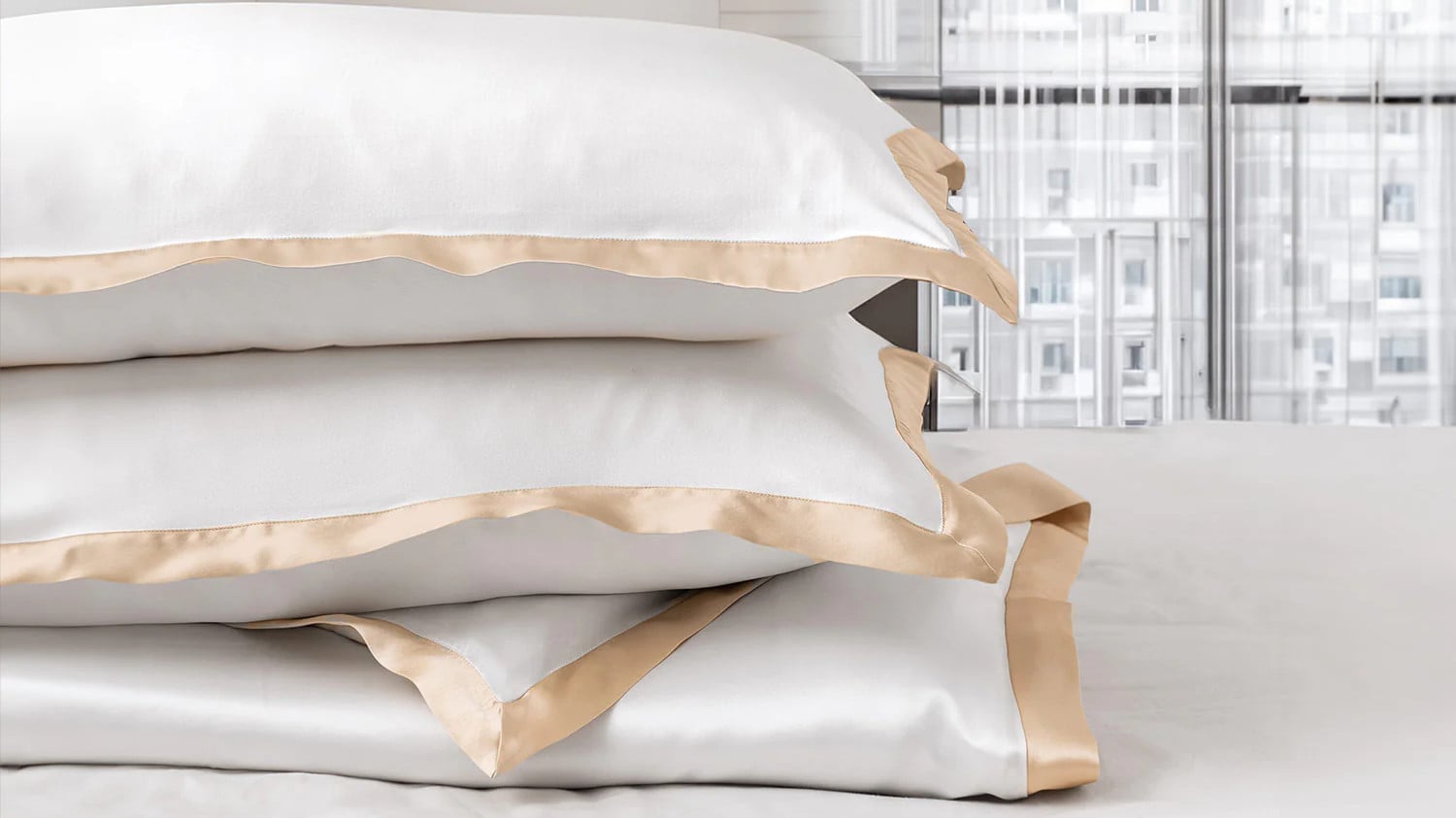
Momme (mm) is the measure of silk fabric density – the higher the number, the denser, heavier, and more durable the weave. A pillowcase below 19 momme tends to be thin, prone to pilling, and less effective at maintaining a smooth surface over repeated washes. Dermatologists and product experts generally recommend 19 momme as the minimum threshold worth investing in, with 22-25 momme offering the most substantial feel and longest-lasting skin benefits. Mayfairsilk’s Flamingo’s Finest pillowcase sits at 25 momme – among the densest options available in the consumer market.
Grade 6A Mulberry Silk Explained
Beyond momme count, silk is graded on the quality of the raw fibres used. Grade 6A is the highest classification available, indicating that only the longest, most uniform, and most lustrous filaments from the silkworm cocoon have been used. These fibres produce a smoother, more consistent surface – one that resists pilling, maintains its sheen, and stays gentle against skin over time. Lower-grade silk uses shorter, more irregular fibres that feel rougher and break down faster. The naturally smooth protein structure of Grade 6A mulberry silk allows it to interact gently with the skin’s surface rather than disrupting it.
Switch to Silk Tonight – Your Skin Will Show It
Sleep wrinkles are not inevitable. They form because of a combination of sustained compression, repetitive friction, and moisture loss – all of which are influenced directly by the fabric the face rests on each night. Switching to a high-quality mulberry silk pillowcase does not require changing a skincare routine, adjusting a diet, or booking a clinical appointment. It is a passive intervention that works during the hours already being spent asleep.
The results are not immediate. But with consistent use, the reduction in mechanical stress – combined with better skin hydration and improved retention of nighttime skincare – creates a noticeably different environment for the skin to recover in. For anyone already investing in anti-ageing skincare, the pillowcase is the logical next step: the surface that determines how much of that investment is preserved through the night.
Mayfairsilk
13 Hanover Square
Mayfair
London
England
W1S 1HN
United Kingdom


