
Bay Area property owners are accustomed to thinking about wildfire safety when making decisions about roofing, siding, vegetation, and defensible space. But the materials used at ground level deserve attention, too.
For homeowners, businesses, HOAs, and property managers throughout the Bay Area, choosing artificial grass isn’t only about finding turf that looks natural, saves water, and reduces maintenance. In wildfire-prone locations, fire performance can also be an important factor.
That’s where the difference between standard and fire-rated artificial grass becomes significant. While standard synthetic turf can offer excellent landscaping benefits, fire-rated artificial grass has been specifically designed and tested for its performance when exposed to fire conditions.
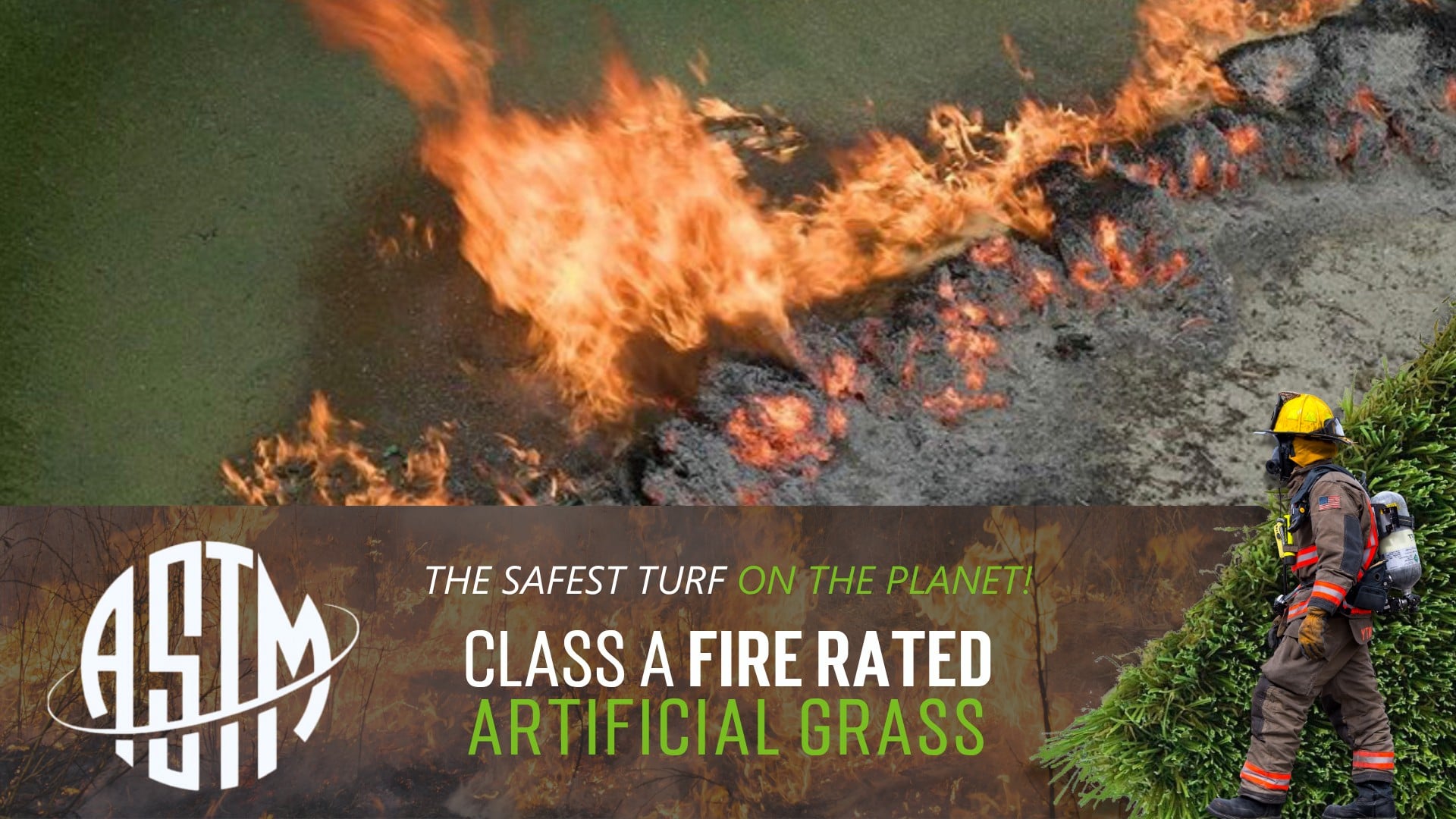
SYNLawn offers the largest collection of ASTM E108 Class A fire-rated artificial grass, giving Bay Area customers more options for combining beautiful landscaping with tested fire performance.
Why Wildfire Zones Change the Artificial Grass Conversation
A wildfire doesn’t necessarily need to reach a home or commercial building for the property to face danger.
One of the biggest concerns is wind-driven embers. These burning particles can travel ahead of a wildfire and land on roofs, decks, yards, and other surfaces, potentially creating additional ignition points.
For properties located in or near California’s Wildland-Urban Interface (WUI), that makes the fire characteristics of landscaping materials worth considering.
Artificial grass can provide water conservation, year-round color, and reduced maintenance, but products aren’t identical when it comes to fire performance. Property owners should consider not simply whether they want synthetic turf, but which turf system they are installing and what fire testing it has undergone.
Standard vs. Fire-Rated Artificial Grass: What’s the Difference?
The biggest difference is straightforward: verified fire performance.
Standard artificial grass may be an excellent choice for many landscaping applications. However, simply being synthetic turf does not mean a product or its complete installation system has earned a high fire rating.
Several components can influence performance, including:
- Turf fiber composition
- Backing materials
- Infill
- The overall installation system
Fire-rated artificial grass is different because it has been designed and independently tested against established fire-performance standards. SYNLawn offers turf products that have achieved ASTM E108 Class A performance, with testing that includes flame-spread and intermittent-flame exposure.
That independent testing gives customers documented information about how a system performs under defined fire-test conditions instead of relying solely on general claims about the material.
Understanding ASTM E108 Class A
If you’re comparing fire-rated artificial grass, ASTM E108 Class A is an important term to understand.
ASTM E108 evaluates how materials and assemblies perform when subjected to external fire conditions. A Class A rating is one of the highest fire-performance classifications available under this testing.
Testing evaluates resistance to factors including:
- Flame spread
- Burning embers
- Fire penetration
SYNLawn’s fire-safety systems undergo demanding testing that includes flame-spread and intermittent-flame exposure.
For properties in California wildfire zones, documented fire performance can be especially valuable. Local building, fire, landscaping, and WUI requirements can vary by jurisdiction and project, so property owners should always confirm the rules that apply to their specific location.
How Does Fire-Rated Artificial Grass Respond to Embers?
Burning embers are a significant concern during wildfires because they can be carried by wind and create new ignition points around a property.
SYNLawn describes its Class A-rated artificial grass as being capable of absorbing heat while allowing embers to burn out rather than supporting continued fire spread. Its fire-conscious turf systems were developed with the goal of helping inhibit a fire’s progression.
This is also why evaluating the complete artificial grass system matters.
The turf itself is only one part of an installation. Infill and other components can contribute to overall fire performance. Property owners should therefore avoid assuming that every artificial grass installation will respond to fire in the same way simply because the surfaces look similar.
Fire-Rated Doesn’t Mean Fireproof
An important distinction needs to be made: fire-rated artificial grass is not fireproof artificial grass.
A fire rating means that the product or system has demonstrated specific performance under controlled testing conditions. It does not mean a landscape or property cannot be damaged by wildfire.
Fire-rated turf is best viewed as one component of a broader wildfire-preparedness strategy. Other considerations can include defensible space, vegetation management, ember-resistant construction, and compliance with applicable local requirements.
The advantage of choosing fire-rated turf is that its fire performance has been evaluated rather than assumed.
Real-World Fire Performance
Laboratory testing provides valuable information, but SYNLawn also points to a real-world example of its turf’s fire-performance characteristics.
During a 2016 fire at The Cosmopolitan hotel in Las Vegas, SYNLawn reports that SYNRye 211, a product manufactured with 100% nylon fibers and carrying an ASTM E108 Class A fire rating, was credited with helping contain the fire.
The example demonstrates why fiber composition and independently tested performance can become meaningful considerations when choosing synthetic turf for locations where fire resistance matters.
Why Nylon Matters for Fire Performance
Not all synthetic turf fibers are made from the same material.
Nylon is particularly notable for its heat resistance and strong fire-performance characteristics. SYNLawn uses premium nylon fibers in its putting-green products, combining durability and playing performance with important fire-performance benefits.
That gives customers another reason to look beyond appearance when comparing artificial grass products.
A turf system may look realistic and feel great underfoot, but understanding its materials, testing, and ratings can provide a much more complete picture of its performance.
More Choices for Fire-Conscious Landscaping
Choosing artificial grass for a wildfire-prone property doesn’t mean settling for a single type of turf or sacrificing the appearance of the landscape.
SYNLawn offers the largest collection of ASTM E108 Class A fire-rated artificial grass, allowing property owners to consider fire performance while still choosing turf suited to their specific application, traffic demands, and aesthetic goals.
Fire-rated turf options can be considered for a variety of Bay Area applications, including:
- Residential lawns
- Commercial landscapes
- HOAs and multifamily properties
- Rooftops and amenity spaces
- Recreational areas
- Golf and putting greens
This flexibility can be particularly valuable for customers who want to create an attractive, functional landscape while making fire performance part of the product-selection process.
Fire-Conscious Landscaping Can Still Look Beautiful
Wildfire-conscious landscaping doesn’t have to mean giving up a green, comfortable outdoor space.
Artificial grass can help Bay Area properties maintain an attractive appearance while reducing irrigation and eliminating many routine lawn-maintenance tasks. With an appropriate fire-rated system, property owners can also incorporate documented fire performance into the landscape.
Instead of asking only:
“Which artificial grass looks best?”
Property owners in wildfire-prone areas may want to ask:
“Which artificial grass looks right for my property and has the fire-performance testing I want?”
That simple change in perspective can make it easier to compare turf products based on more than appearance and price.
Frequently Asked Questions About Fire-Rated Artificial Grass in San Francisco Bay Area
What is fire-rated artificial grass?
Fire-rated artificial grass is designed to slow flame spread and self-extinguish once the ignition source is removed.
Fire-rated artificial grass from SYNLawn has been independently tested to meet specific fire-performance standards, including ASTM E108 Class A. This testing helps evaluate how materials and systems perform when subjected to external fire conditions.
That testing is what separates fire-rated turf from standard artificial grass products that may not have comparable documented fire-performance ratings.
Why is ASTM E108 Class A important?
ASTM E108 Class A is one of the highest fire ratings available.
The testing evaluates resistance to important fire hazards, including:
- Flame spread
- Burning embers
- Fire penetration
This rating can be particularly valuable in wildfire-prone areas of California, where fire-rated materials may be recommended or required depending on applicable building, fire, and WUI requirements.
SYNLawn offers the largest collection of ASTM E108 Class A fire-rated artificial grass, providing property owners with more choices when documented fire performance is a priority.
Are SYNLawn putting greens fire-rated?
YES! One of the standout features of SYNLawn putting greens is the material they’re made from premium nylon fibers.
Unlike many traditional synthetic turf materials, nylon provides excellent heat resistance and can deliver strong fire-performance characteristics. SYNLawn’s fire-safety information highlights its 100% nylon products like Precision Putt and SYNRye 211, and their ASTM E108 Class A rating.
That means a SYNLawn putting green offers more than a beautiful and realistic playing surface. It’s designed with performance, durability, and safety in mind.
Because fire ratings can apply to particular products and complete turf systems, customers should confirm the applicable rating for the specific putting-green system selected for their project.
Is all artificial grass fire-rated?
No. Artificial grass products can differ in their fibers, backing, infill, construction, and fire-performance testing.
Standard artificial grass should not automatically be assumed to have the same fire characteristics as a product or complete system that has undergone independent testing and achieved an ASTM E108 Class A rating.
If fire performance is important for your project, ask about the testing and rating of the specific turf system being considered.
Is fire-rated artificial grass completely fireproof?
No. A fire rating should not be interpreted as a guarantee that artificial grass or the surrounding property cannot be damaged during a wildfire.
Instead, it indicates that the product or system has demonstrated defined performance under established fire-testing conditions. Fire-rated turf should be incorporated into a broader wildfire-preparedness plan rather than treated as a replacement for defensible space or other fire-safety measures.
Is Fire-Rated Artificial Grass Right for Your Bay Area Property?
For many artificial grass projects, factors such as appearance, softness, drainage, durability, maintenance, and cost naturally influence the decision.
In California wildfire zones, however, fire performance deserves a place on that list.
If your property is located in a wildfire-prone area, near open space, or within a designated WUI, consider asking whether the artificial grass system you’re evaluating has undergone independent fire testing and what rating it achieved.
With the largest collection of ASTM E108 Class A fire-rated artificial grass, SYNLawn gives Bay Area homeowners, businesses, HOAs, and property managers options that combine attractive, low-maintenance landscaping with documented fire performance.
Contact SYNLawn Bay Area today to explore fire-rated artificial grass options for your lawn, commercial property, HOA, recreational space, or backyard putting green.
SYNLawn Bay Area
lou.lujano@synlawn.com
+1-628-242-2557
San Francisco Bay Area
San Francisco
CA
94108
United States


