
SHENZHEN, GUANGDONG, CHINA, November 26, 2026 /EINPresswire.com/ — Wholesale GYTA53 Armored Cable Factory Price Versus Direct Market Supply Chain Benefits
Telecommunication operators and industrial project managers face complex supply chain decisions when procuring heavy-duty optical fiber infrastructure for direct-burial installations. Navigating the commercial trade-offs between purchasing from local distributors and sourcing directly from a Wholesale GYTA53 Armored Cable Factory requires a thorough evaluation of project volume, custom specifications, quality control traceability, and total cost of ownership. GYTA53 double-armored optical cable offers essential mechanical protection against severe crush forces, moisture ingress, and biological threats in harsh soil environments. While local distributors provide immediate stock availability for minor repairs or short cable runs, direct factory engagement delivers strategic advantages for large-scale infrastructure deployments. Therefore, evaluating supply chain channels through a structured engineering lens enables procurement teams to optimize project budgets while safeguarding long-term network reliability.
Strategic Sourcing Evaluation: Direct Factory Supply versus Regional Distribution in Heavy-Duty Infrastructure
Large-scale optical infrastructure projects require careful alignment between material specifications, delivery schedules, and capital expenditure budgets. Underground direct-burial networks represent a significant long-term civil engineering investment where cable failure can trigger expensive excavation and service downtime. Consequently, procurement officers must weigh the financial structure of direct manufacturer pricing against the convenience of regional distributor networks.
Regional distributors typically stock standardized cable configurations in local warehouses, absorbing import tariffs, storage overhead, and freight logistics. While this distribution model offers rapid delivery for immediate field maintenance, multi-tier middleman markups significantly increase the final unit cost per meter. Conversely, direct factory sourcing eliminates intermediary fees, providing wholesale pricing structures that yield substantial savings on high-volume orders. However, direct procurement requires longer lead times for production, international ocean shipping, and customs clearance, making channel selection a balance between financial savings and timeline urgency.
Technical Structural Comparison: GYTA53 Double-Armored Direct Burial versus GYTS Single-Armored Cable
Selecting the appropriate armored cable structure represents a foundational engineering decision that directly impacts trenching methods and cable lifespan. GYTA53 armored cables feature a robust double-jacket, double-armor design specifically engineered for harsh direct-burial environments. The internal structure incorporates loose tubes containing single-mode fibers stranded around a central strength member, surrounded by water-blocking compounds, an inner polyethylene (PE) jacket, an aluminum tape moisture barrier, an outer steel tape armor, and a durable outer PE jacket. Available in configurations ranging from GYTA53 2 to 288 cores, this multi-layer defense delivers exceptional crush resistance and mechanical strength.
In contrast, standard GYTS optical cables utilize a lighter single-jacket, single-armor structure containing corrugated steel tape armor. Available in GYTS 6 to 196 core configurations, GYTS cables perform exceptionally well in aerial routes and underground duct installations where mechanical impact risks remain moderate. However, deploying single-armored GYTS cables in unfloored direct-burial trenches exposes optical fibers to severe soil compaction and rodent attack. Choosing GYTA53 double-armored cables ensures long-term physical protection, justifying the higher raw material investment for critical underground backbone links.
The 5 Core Advantages of Direct Factory Sourcing for High-Volume Optical Cable Projects
Engaging directly with a manufacturing facility yields five distinct strategic benefits for large-scale optical infrastructure rollouts:
Lead-Time Optimization and Production Prioritization: Direct factory orders receive dedicated production scheduling on automated extrusion lines, avoiding distributor warehouse allocation delays for massive cable quantities.
Custom Engineering and Anti-Rodent Enhancements: Direct engagement allows engineers to request customized outer sheath formulations, thickened steel tape armor, or specialized anti-rodent additives. For instance, projects like the African Mining Group Anti-Rodent Armored Optical Cable deployment demonstrate how tailored double-armored constructions prevent biological cable damage in harsh environmental conditions.
Traceable Quality Assurance and Batch Testing: Direct procurement provides complete access to 100% factory Optical Time-Domain Reflectometer (OTDR) trace reports, mechanical tensile test certificates, and raw material mill sheets for every manufactured spool.
Technical After-Sales and Warranty Support: Engineering teams gain direct access to factory technical specialists, ensuring rapid resolution of field installation queries or custom splicing requirements.
Total Cost of Ownership Optimization: Eliminating distributor markups significantly lowers material procurement expenditure across large-scale projects, similar to high-volume infrastructure rollouts seen in regional telecom operator network expansions.
Objective Channel Analysis: Scenarios Where Local Distributor Sourcing Remains Optimal
Despite the compelling financial benefits of factory-direct procurement, local distribution channels maintain an essential role in telecommunication supply chains. Procurement officers must recognize specific operational scenarios where distributor sourcing offers clear practical advantages:
Small-Batch Procurement Flexibility: Projects requiring short cable lengths that fall below factory Minimum Order Quantity (MOQ) thresholds benefit from local distributor inventory without incurring high minimum production fees.
Rapid Local Stock Replenishment: Emergency field repairs and unexpected network maintenance demand immediate material access, where local warehouse pickup prevents costly network outage delays.
In-Country Logistics and Customs Handling: Distributors manage complex import compliance, local taxation, and regional freight logistics, reducing administrative burdens for smaller regional contractors.
Operational Logistics Excellence: Fiber Hope Factory Export & Quality Assurance Framework
Delivering high-density armored optical cables across international borders requires stringent manufacturing standards and specialized export packaging capabilities. Heavy-duty GYTA53 cable spools can sustain mechanical damage during long-distance ocean transit if protective packaging proves inadequate. Consequently, tier-one export manufacturers implement rigorous logistics protocols to safeguard material integrity from the production line to the project site.
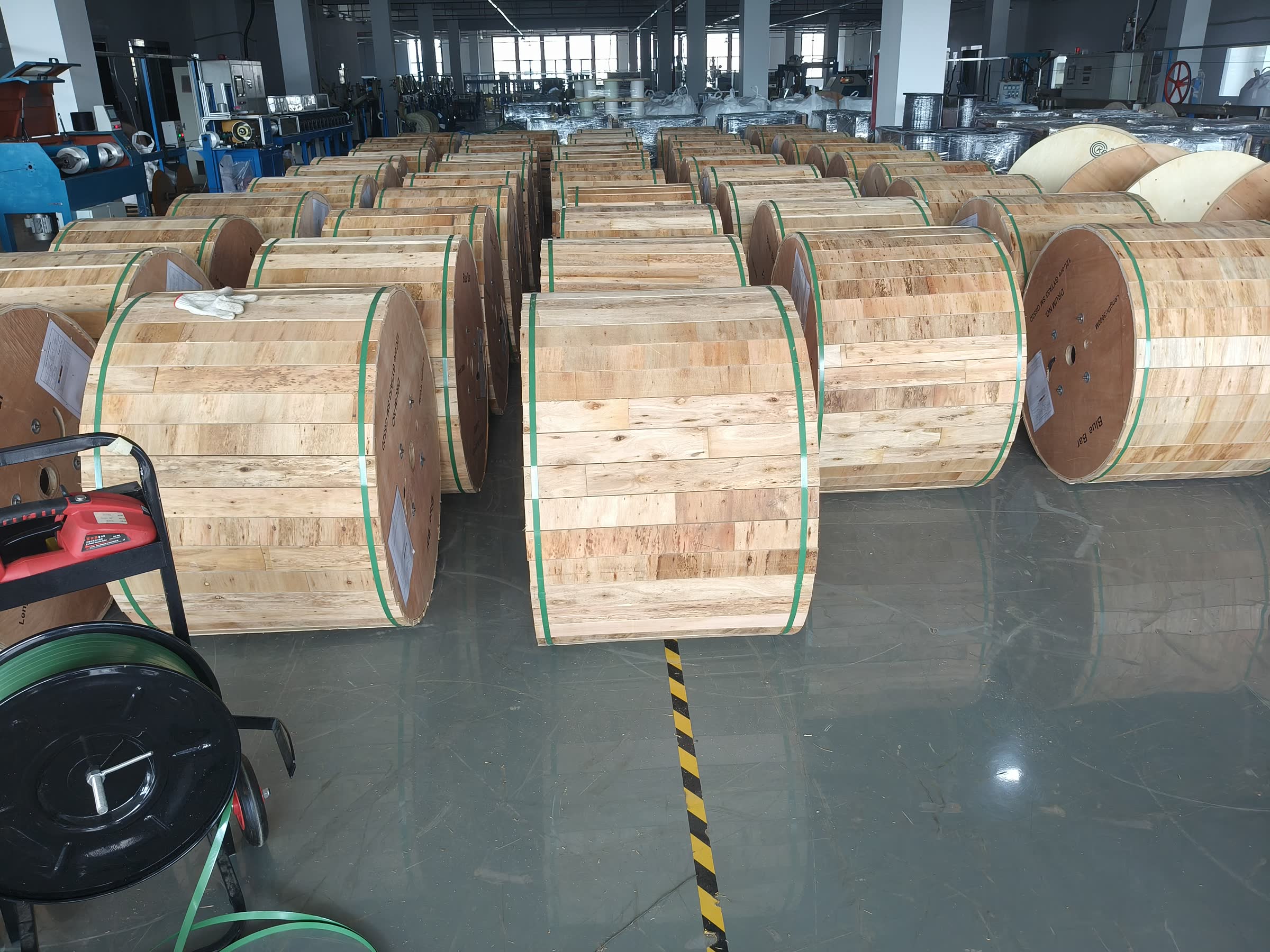
To guarantee pristine cable condition upon arrival, Fiber Hope (Fiber Hope Optical Communication Tech Co.,Ltd.) utilizes reinforced wooden spools, moisture-proof wrapping, and secure container loading methods. Production workflows integrate comprehensive ISO 9001, CE, and RoHS quality management systems, ensuring that every production lot undergoes rigorous mechanical crush testing, temperature cycling, and optical loss verification. This end-to-end quality framework provides international buyers with transparent manufacturing tracking, customized reel lengths, and predictable delivery schedules for major utility rollouts.
Strategic Decision Framework & Operator Procurement Sourcing Checklist
Choosing between direct factory supply and regional distribution requires a systematic evaluation of project parameters, technical requirements, and delivery timelines. By matching procurement channels to specific operational needs, project managers can achieve optimal cost efficiency while maintaining strict quality standards.
Procurement Sourcing Decision Checklist:
Order Volume Verification: Does the total required cable footage meet or exceed factory production Minimum Order Quantity (MOQ) thresholds?
Customization Requirements: Does the installation environment demand specialized double-jacket armor, rodent-resistant chemical barriers, or custom reel lengths?
Quality Traceability Access: Does the engineering specification require 100% factory-certified OTDR loss traces and raw material compliance documentation for every reel?
Logistics Timeline Alignment: Can the project schedule accommodate standard factory production lead times, ocean freight transit, and customs clearance procedures?
Emergency Repair Contingencies: Has the project team established local distributor contacts for immediate stock replenishment during unexpected field repairs?
For comprehensive technical specifications, custom cable design options, and factory export documentation, visit the official company website at https://www.cablefiberhope.com/.
Fiber Hope Optical Communication Tech Co., Ltd.
Fiber Hope Optical Communication Tech Co., Ltd.
email us here
Legal Disclaimer:
EIN Presswire provides this news content “as is” without warranty of any kind. We do not accept any responsibility or liability
for the accuracy, content, images, videos, licenses, completeness, legality, or reliability of the information contained in this
article. If you have any complaints or copyright issues related to this article, kindly contact the author above.

Media gallery