
Key Takeaways
- Shrink wrap uses heat to contract tightly around a product, while pallet stretch wrap relies on tension alone to secure a load, with no heat needed
- Light-to-medium pallets are typically wrapped with 400mm-wide, 17 micron film, while heavier or sharper loads call for 500mm-wide, 25 micron film
- Measuring a package correctly, including an allowance for shrinkage, prevents wasted film and stops corner ears or incomplete shrink from forming
- Core type matters almost as much as width and thickness – extended cores create built-in handles that can reduce strain and improve tension control during manual wrapping
- Roll cost tends to scale with width and thickness, though choosing the right size for the job can still work out cheaper overall
Buying shrink wrap or pallet wrap for the first time can feel like guesswork – too narrow a roll and the film runs out before the pallet’s covered, too thick and money gets spent on protection the load never needed. Getting the width, thickness, and roll format right from the start saves both cash and frustration on the warehouse floor.
Experts at Globe Packaging, a UK-based packaging supplier, explain that choosing the right film width, thickness and roll format is essential for controlling packaging costs and reducing material waste.
Shrink Wrap vs Stretch Wrap: Know the Difference
The terms “shrink wrap” and “pallet stretch wrap” get used interchangeably so often that many buyers assume they’re the same product. They aren’t, and the difference matters when choosing film for a job.
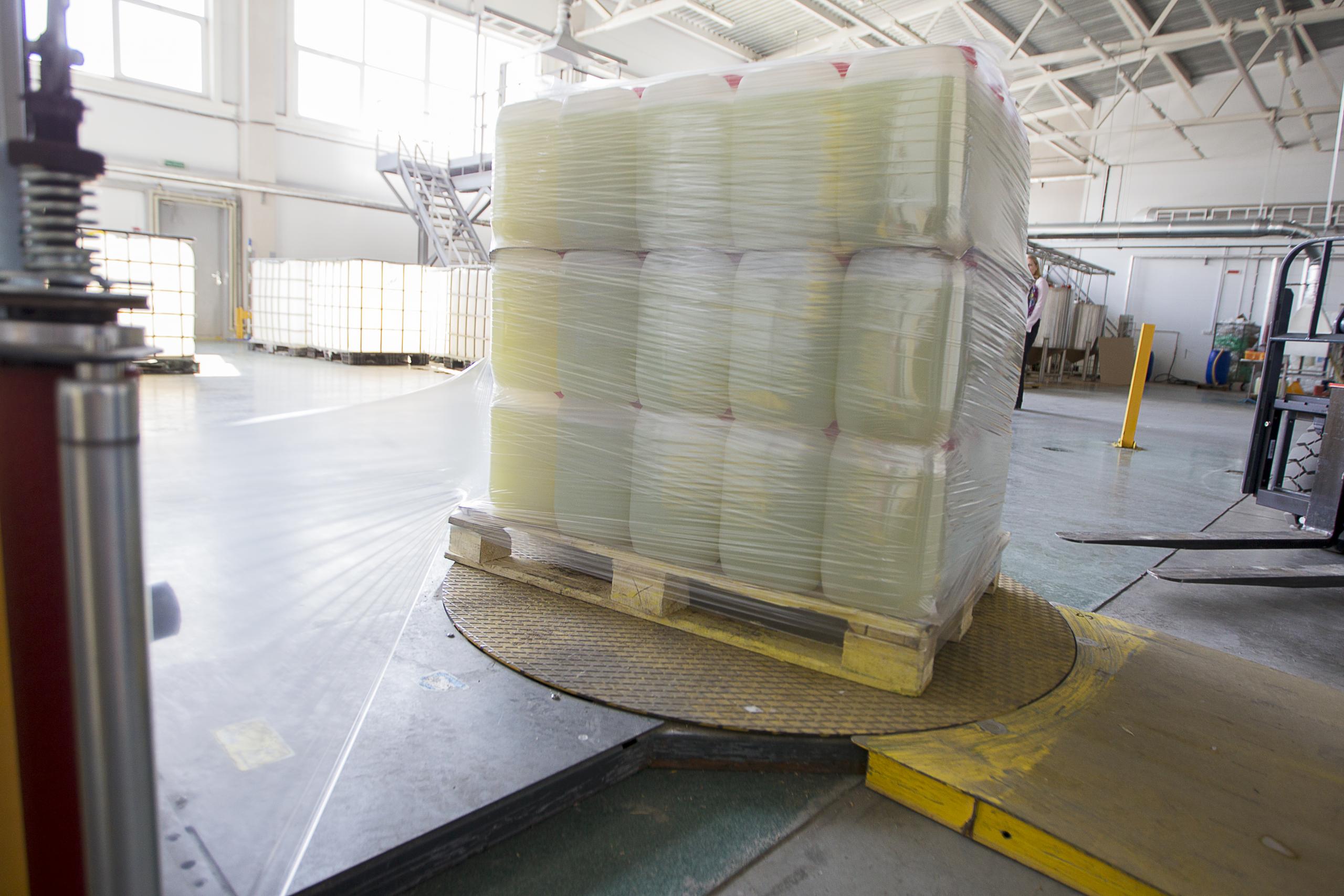
Shrink wrap is a polymer film that contracts when heat is applied, moulding tightly around whatever it covers once it passes through a heat source. Stretch wrap, often called pallet wrap, is an elastic film that holds items together purely through tension as it’s wound around a load – no heat involved at any stage. Pallet wrap is frequently labelled “shrink wrap” in everyday conversation, yet the two serve distinct purposes: one suits individual product packaging that needs a snug, heat-formed finish, while the other is built for securing stacked or palletised goods during transit and storage.
Matching Roll Width to Your Load
Roll width is one of the first decisions to get right, since it determines how much coverage each revolution provides and how efficiently film gets used. The best starting point is thinking about what’s actually being wrapped – a single box, a tall pallet, or a handful of small items bundled together – since each calls for a different width.
400mm Rolls for Light-Medium Pallets
A 400mm width (roughly 16 inches) is the most commonly reached-for size for standard wrapping jobs. It suits boxed goods, furniture with protective corners, and other regularly shaped items of moderate weight. This width strikes a sensible balance between coverage and material use, making it a practical default for parcel wrapping and light-to-medium palletised loads without overspending on film that isn’t needed.
500mm Rolls for Heavy-Duty Loads
For larger pallets or heavier loads, a 500mm width (about 20 inches) covers more surface area with fewer revolutions. That efficiency becomes valuable in busy warehouse settings where wrapping speed affects overall throughput. Paired with a heavier-gauge film, 500mm rolls are built for loads that demand stronger containment force and better resistance to punctures from awkward shapes or sharp edges.
Mini Rolls for Bundling and Reinforcement
Mini rolls sit at the opposite end of the size range and serve a different purpose altogether. Their narrow profile makes them easy to handle for smaller jobs, such as:
- Bundling multiple small items together for shipping
- Securing promotional materials or multi-packs
- Reinforcing stress points on packages with irregular shapes
- Manual wrapping tasks in retail or small business settings
Their compact size means they’re rarely the right choice for full pallets, but for small-scale or supplementary wrapping, they fill a gap that standard-width rolls can’t handle as neatly.
Choosing the Right Film Thickness
Thickness, measured in microns, works alongside width to determine how well a roll performs. It affects puncture resistance, load-holding force, and how much strain the film can withstand before failing – so it’s worth weighing against the shape, weight, and edges of whatever’s being wrapped.
17 Micron Standard Duty
A 17 micron film, typically paired with 400mm width, suits stable loads with few sharp edges or protrusions. It offers solid economy for controlled environments and works well with boxed goods, protected furniture, and other evenly shaped, moderately weighted items. For many everyday wrapping tasks, this thickness delivers enough strength without paying for capability that goes unused.
25 Micron Heavy Duty
When loads involve sharp corners, significant weight, or rough handling further down the supply chain, 25 micron film – usually found in 500mm width – offers considerably more protection. It brings superior tear and puncture resistance along with stronger containment force, which matters when a damaged or collapsed pallet would cost far more than the film itself. It uses more material than standard-duty options, and that trade-off is often worth it when product damage or load failure is the alternative.
Measuring Packages to Avoid Waste
Getting the measurements right before buying or cutting film prevents two common problems: running short on coverage, or wasting material on excess that simply gets trimmed away. A little arithmetic upfront saves both money and hassle.
Calculating Film Width for Rectangular Items
For a rectangular item, add the product’s width and height together, then add roughly 2 inches to allow for shrinkage, rounding up to the nearest whole inch. An 8-inch wide, 3.5-inch high box, for example, works out to around 14 inches of film. A similar approach applies to centre-fold film, where width and height are added to the same 2-inch allowance – a 6 x 6 x 4 inch box would need about 12 inches of centre-fold film, which opens out to 24 inches when laid flat.
Calculating Film Width for Round Items
Round items need a slightly different sum. Multiply the diameter by 3.14, add roughly 10% for shrinkage, then halve the result and round up to the next whole inch. A 5.5-inch diameter item, following this method, comes out to around 10 inches of film – enough to cover the shape properly without excess bunching at the ends.
Fixing Corner Ears and Incomplete Shrink
Excess film at the corners of a package can form “ears” that don’t shrink away cleanly, leaving an untidy finish. Trimming the film width down to the minimum needed to close the bag properly is one straightforward fix. Incomplete shrink is a separate issue, usually caused by a package leaving the heat tunnel before the film’s had enough time to react – slowing the conveyor speed or adjusting the tunnel’s temperature can usually resolve it.
Core Types: Standard vs Extended Grip
Core type is easy to overlook, but it has a real effect on how comfortable and consistent manual wrapping becomes over a long shift. Standard core rolls feature a cardboard tube that extends only to the edge of the film, which keeps the roll lightweight and works fine for occasional use or operations running several wrapping stations. Extended core rolls, by contrast, have tubes that stick out beyond the film edges, forming natural handles on either side.
Those handles make a noticeable difference during hand-wrapping. Gripping the extended core rather than the film itself helps maintain steadier tension throughout the wrap, which can reduce wrist strain and lead to more consistent results. For operations doing a high volume of manual wrapping, extended cores are worth treating as the standard choice rather than an occasional upgrade, given how much they can improve both comfort and material efficiency.
What Drives Pallet Wrap Pricing
Roll pricing generally scales with both width and thickness – wider, heavier-gauge films cost more per roll than narrower, lighter ones. Purchase price is only part of the picture, though. Application time, how much film gets wasted during wrapping, and the cost of potential product damage from inadequate protection all factor into the real cost of a wrapping job, even if they don’t show up on the invoice.
Bulk purchasing can meaningfully reduce the per-roll cost for businesses wrapping pallets regularly, which is worth factoring in when comparing suppliers.
Right-Sized Film Cuts Cost and Waste
Choosing shrink wrap or pallet wrap doesn’t need to be complicated once the basics are clear: match the film type to the job, pick a width and thickness suited to the load’s weight and shape, measure properly to avoid wasted material, and consider core type if wrapping is done by hand.
Each of these decisions compounds – get them right together, and both the cost per pallet and the risk of damaged goods drop noticeably.
For more information on selecting the right film for different packaging applications, explore Globe Packaging’s shrink wrap roll size chart and cost guide, covering roll dimensions, thicknesses, core types and cost considerations.
Globe Packaging
Unit 5, Caxton Trading Estate
Hayes
Middlesex
UB3 1AP
United Kingdom


